
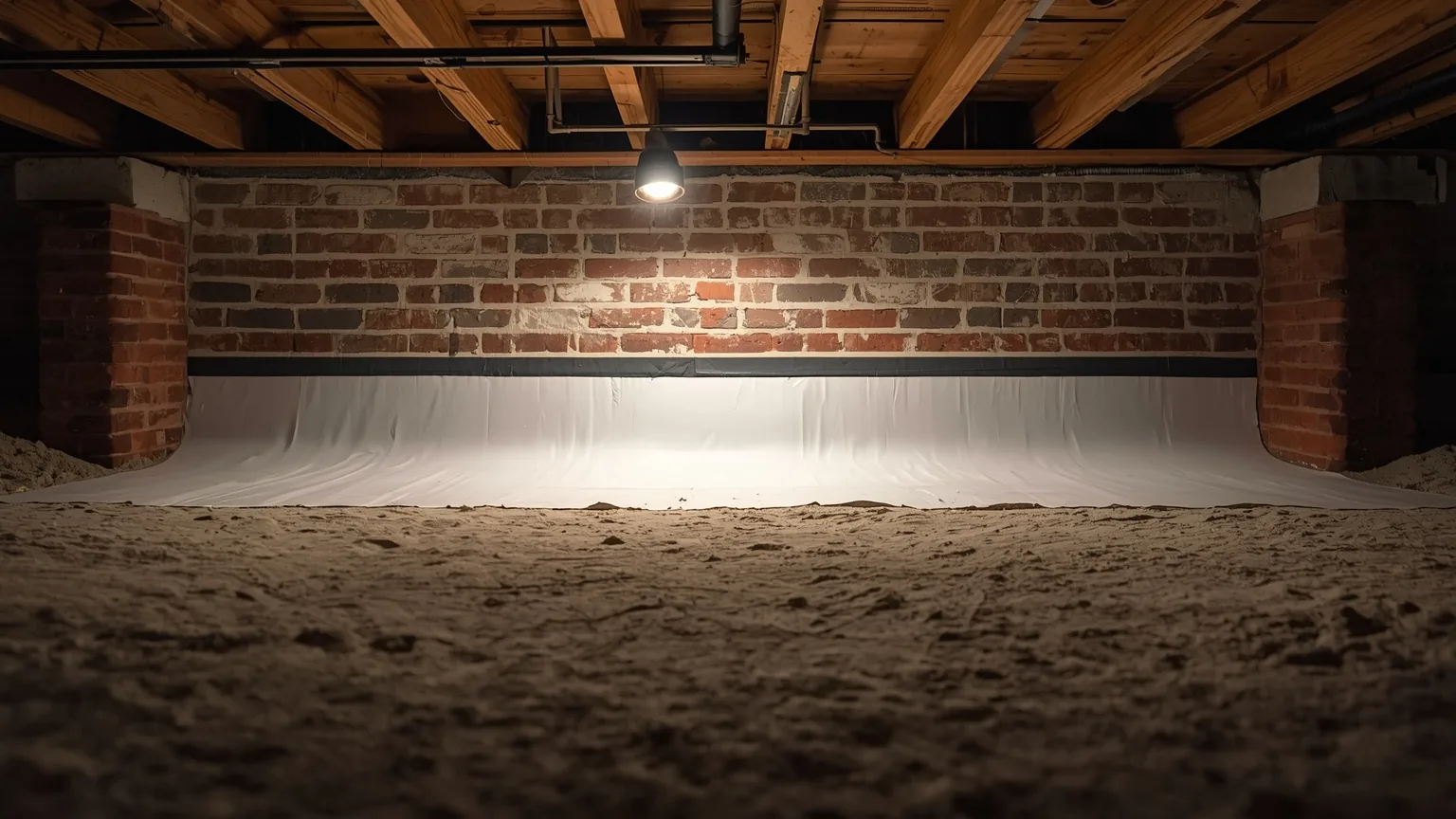
This question matters more in Charleston than almost anywhere else in the country, and it is worth settling before a liner goes in rather than after.
Does encapsulation interfere with a termite inspection?
It can, because a wall liner and perimeter insulation cover the same foundation surfaces an inspector reads for mud tubes. The sealing work itself is legitimate and code-recognized; the problem is only that nobody planned the inspection path. Raised early with the contractor and whoever holds your termite agreement, it is a scoping detail. Raised afterward, it is a dispute.
Why is this a bigger deal in Charleston?
Because of what lives in the ground here. Formosan subterranean termites entered the continental United States through Charleston in the mid-1950s, and Clemson Cooperative Extension reports them established across many areas of Charleston County and into Dorchester and Berkeley. Their colonies can run to several million workers, substantially larger than the native subterranean species.
The detail that matters underneath a house is the route in. An intensive Charleston survey of infested structures found 94 percent were infested from ground-based colonies and only 6 percent from aerial nests. The ground is the pathway — and the ground is exactly what a crawl space sits on and what encapsulation covers.
What does a termite inspector actually need to see?
Broadly, the surfaces where a ground colony would have to cross from soil into wood: the top of the foundation wall, the sill plate, the rim area and the piers. Those are visual inspection points, and material fastened over them removes the visibility rather than the risk.
That is why the practical answer is rarely "do not encapsulate." It is to agree in advance which surfaces stay readable, and to document it.
How do you keep both?
- Tell your termite company before the work is booked, not after. If a bond or agreement is in place on the house, the terms may say something about alterations to the crawl space.
- Ask the crawl space contractor how the inspection path is handled and get the answer in the written scope rather than as a verbal reassurance.
- Ask whether wall liner terminates short of the sill plate and how the top edge is finished, so the wood band above it stays visible.
- Keep photographs from before the liner went in. They are useful to any future inspector and to you.
- Do not treat encapsulation as termite protection. It is moisture work. Termite treatment is licensed pest control, a separate trade with separate obligations.
Does encapsulation make termites more likely?
We have not seen a credible source claiming that, and we are not going to invent one. The honest statement is narrower and more useful: encapsulation changes what an inspector can see, and it changes moisture conditions in the space. Reducing sustained dampness is generally good for wood. Reducing visibility is not. Those are separate effects and both are worth managing.
Who should you ask?
Two different people, on purpose. Your crawl space contractor owns the moisture scope — see our page on crawl space encapsulation and on choosing a contractor. A licensed pest control operator owns anything to do with termites, treatment or bonds. Any contractor who tells you their liner handles the termite question is answering outside their trade.