
Crawl space marketing tends to present sealing as the modern answer and venting as a mistake. The code takes a more measured view, and so should a homeowner.
Are vented crawl spaces allowed in South Carolina?
Yes. The residential code recognizes two ways to build an under-floor space: a vented one, where openings let outside air move through, and an unvented one built under Section R408.3, which is what encapsulation is. Both are legitimate. What is not legitimate, and not effective, is a space that is neither — vents partly closed, no conditioning, and no coherent design.
How does a vented crawl space work?
The idea is that outside air moving through the space carries moisture away with it. That works well when the outside air is drier than the crawl space air, which is true for much of the year in a cool dry climate.
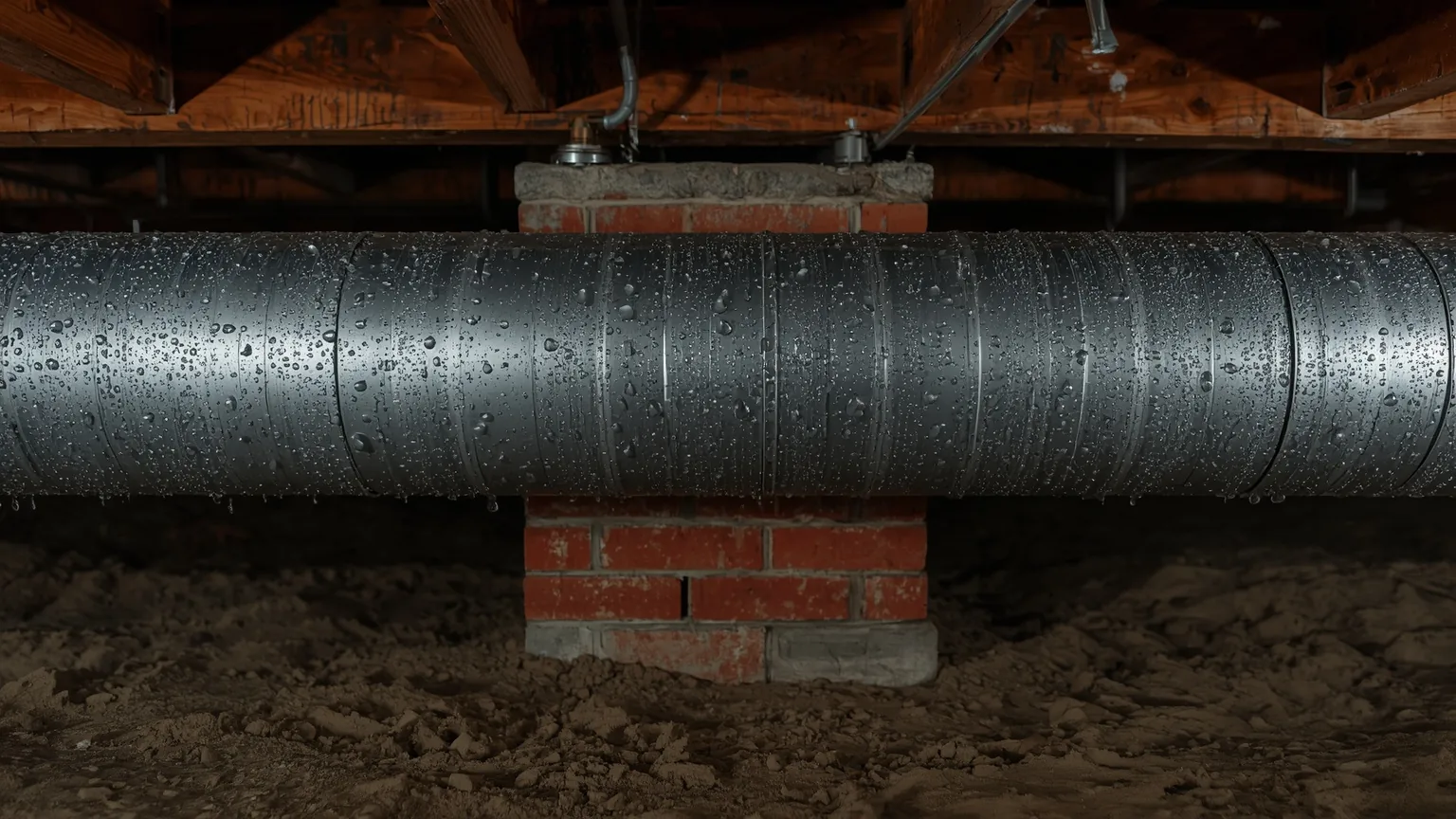
The trouble is the months when it is not true. Warm air holds far more moisture than cool air, so in a Lowcountry summer the air being invited in is carrying a substantial moisture load, and the surfaces it meets under your floor are cooler than it is. Rather than drying the space, the ventilation delivers moisture to it.
How does a sealed crawl space work?
The ground is covered with a continuous sealed liner, the liner is carried up and attached to the foundation walls, the vents are closed, and the humidity inside is deliberately controlled. Section R408.3 requires one of four conditioning methods for the sealed space: continuously operated mechanical exhaust, a conditioned air supply, a plenum arrangement in an existing structure, or dehumidification.
That last requirement is the one people skip. Sealing without conditioning is not the sealed approach done cheaply — it is a different thing entirely, and it can perform worse than the vented space it replaced.
What does South Carolina require of the liner?
More than the model code does. Where the model International Residential Code asks for a continuous Class I vapor retarder — a permeance rating that ordinary polyethylene meets — South Carolina's R408.3 requires a continuous vapor retarder meeting ASTM E1745 Class A, which is a performance standard covering strength and puncture resistance as well. The vapor barrier page covers what that means when reading a quote.
Which one should my house have?
It depends on what the space is actually doing, which is a measurement question rather than a philosophical one. A dry, well-drained crawl space with sound ground cover that holds reasonable humidity through August is not obviously broken and may not need converting. A space that reads high every summer, drops insulation and smells is describing a problem that ventilation is not solving.
And if liquid water enters, neither approach applies yet — that is a waterproofing question and it comes first.