
Crawl Space Dehumidifier Installation in Charleston, SC
A dehumidifier is one of four ways South Carolina's code lets you condition a sealed crawl space. Unlike some states, it does not tell you how big — which puts the sizing question on you.
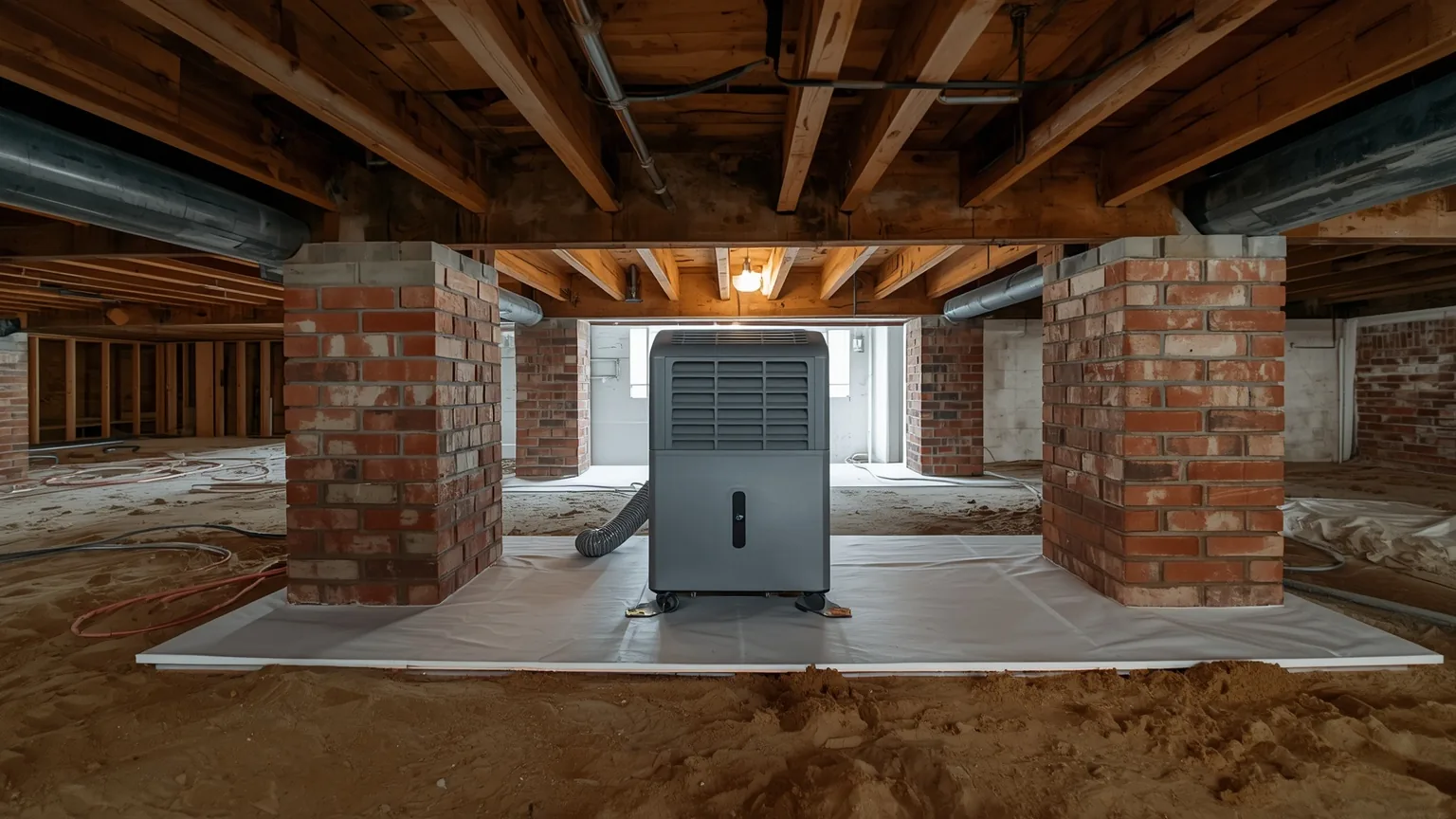
Who handles crawl space dehumidifiers in Charleston, SC?
Charleston Crawl Space Solutions arranges crawl space dehumidifier installation across Charleston and the surrounding counties. A dedicated unit is warranted where a space has been sealed and needs its humidity actively managed. In a vented crawl space it is close to pointless. South Carolina sets no capacity figure in the code, so the sizing should be justified in writing rather than assumed. Call (843) 890-8281 to arrange an evaluation.
When a dehumidifier is the right call
A dehumidifier removes moisture from air. It is therefore the right tool for a sealed space whose remaining problem is humidity, and the wrong tool for almost everything else.
In a vented crawl space it is close to pointless — the unit is dehumidifying the outdoors through your foundation vents, running constantly and achieving very little. In a space with liquid water it treats a symptom while the source continues. The condition under which it earns its cost is a space that has been sealed, has no active water entry, and needs its humidity held down through a Lowcountry summer.
That is why it belongs in the conversation after sealing and after any water work, not instead of them.
The four accepted methods
Sealing a crawl space is only half of what R408.3 requires. The section also requires one of four conditioning methods, and dehumidification is one of them.
- Continuously operated mechanical exhaust at 1 cubic foot per minute for each 50 square feet of crawl space floor area, with an air pathway to the common area and perimeter walls insulated.
- A conditioned air supply sized to deliver 1 cubic foot per minute for each 50 square feet of under-floor area, with a return air pathway and perimeter walls insulated.
- A plenum in existing structures where the under-floor space is used as a plenum, complying with the mechanical provisions.
- Dehumidification sized in accordance with the manufacturer's specifications — which is the wording South Carolina kept, and the reason the sizing question needs asking.
Condensate has to go somewhere permanently
A crawl space dehumidifier pulls water out of the air continuously through the humid months, and that water needs a designed route out: a gravity drain to a suitable point, or a condensate pump where gravity is not available. A unit draining into a reservoir somebody is expected to empty is not a crawl space solution, because nobody goes down there.
Condensate lines are a routine failure point. They block, they get knocked loose, and the first sign is often water on the liner. Whatever the arrangement, it should be inspectable without dismantling anything.
Living with one
These units run for years in an environment nobody visits. Filters need cleaning, coils collect dust, and the drain needs checking. A humidistat that has drifted or a unit that has quietly stopped can go unnoticed for a whole season, by which time the space has run at summer humidity throughout.
The practical answer is a humidity readout visible without crawling underneath, and a reminder to actually look at it. It is a modest detail that decides whether the equipment does its job for a decade or fails silently in year three.
The load this equipment is actually fighting
The June-to-August mean temperature at Charleston International Airport is 80.7 degrees F, against an annual mean of 65.9, on the 1991-2020 normals. That gap is the whole problem in one number: warm air holds far more moisture than cool air, and for roughly a quarter of the year the air arriving at your foundation is at the warm end of that range and close to saturated.
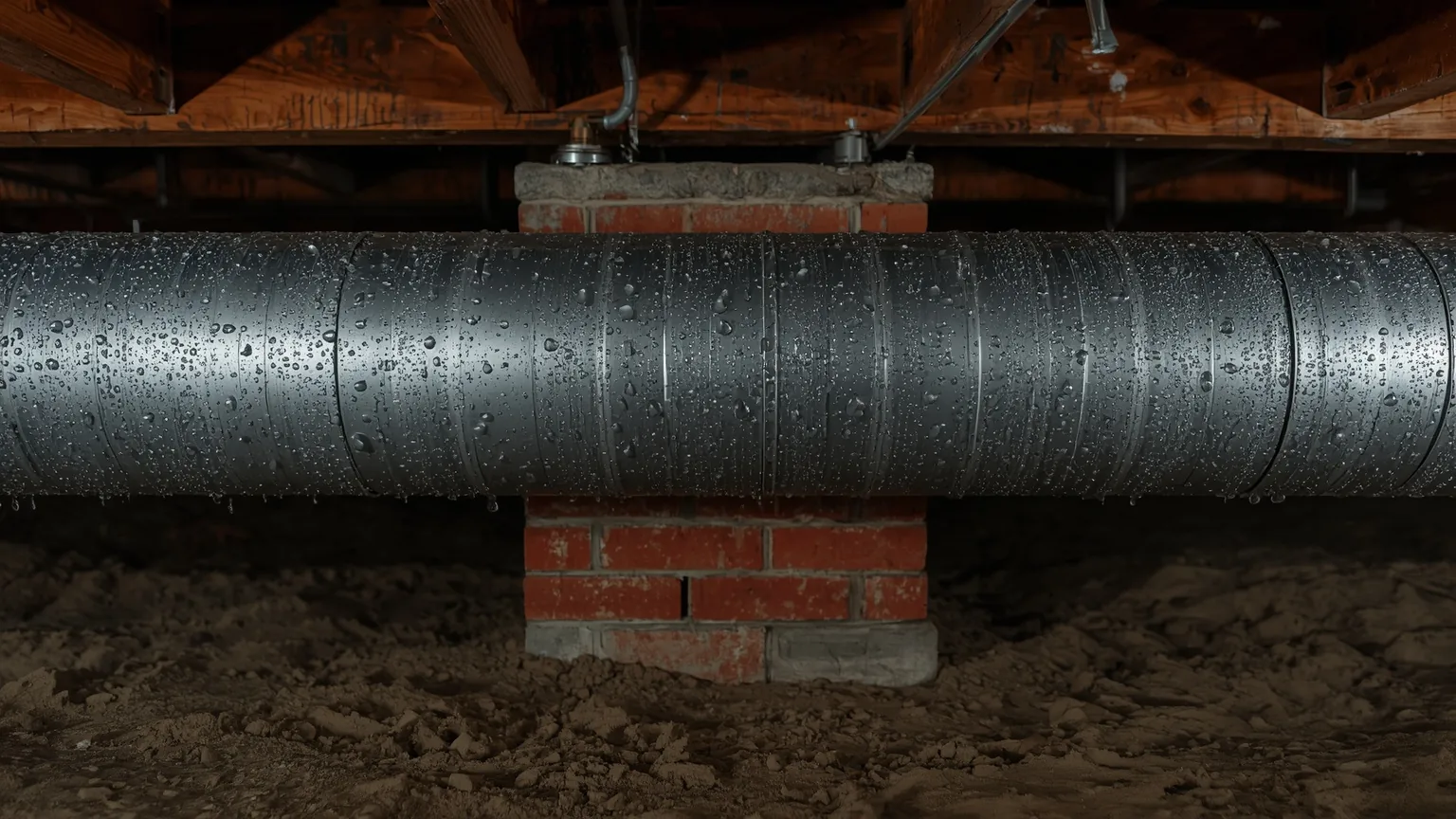
Meanwhile the surfaces under your floor — ductwork, water lines, the underside of the subfloor — sit nearer the annual average than the summer one. Warm wet air meeting cooler surfaces is not a humidity problem in the abstract; it is condensation, and it produces liquid water on solid objects.
So a dehumidifier here is not trimming a few points off a reading. It is holding back a genuine seasonal load for months at a time, which is why the sizing matters and why South Carolina's silence on capacity is worth compensating for by asking. A unit chosen because it was the one on the truck is a unit chosen without reference to your floor area.
Crawl Space Dehumidifiers questions
What size dehumidifier does a Charleston crawl space need?
South Carolina's code does not set a capacity. R408.3 leaves the dehumidification option as sized in accordance with the manufacturer's specifications, so there is no number an inspector checks. That makes it a specification question: ask the contractor for the pints-per-day rating, the floor area it is being matched to, and the basis for the match, in writing.
Does South Carolina require a specific dehumidifier capacity?
No. Some states have written a numeric capacity into their version of this section; South Carolina has not, keeping the model code's manufacturer-specification wording. It means the sizing is governed by the product literature and the contractor's judgment rather than by code, which is worth knowing before you compare quotes.
Do I need a dehumidifier if my crawl space is encapsulated?
You need one of four accepted conditioning methods, and dehumidification is one of them. Mechanical exhaust, a conditioned air supply or a plenum arrangement are the others. What matters is that your scope specifies one of the four rather than sealing the space and stopping.
Can I use a household dehumidifier?
It is generally a poor fit. Consumer units are built for conditioned rooms, usually rely on a reservoir rather than a permanent drain, and lose efficiency at crawl space temperatures. Dedicated units are built for those conditions and for continuous unattended running.
Will a dehumidifier work in a vented crawl space?
Not usefully. With open vents the unit is attempting to dehumidify outdoor air, so it runs continuously, costs money to operate and achieves very little. Sealing comes first, then conditioning the sealed space.
Related crawl space services
Crawl Space Moisture Control
Identifying the source before choosing the remedy.
Crawl Space Encapsulation
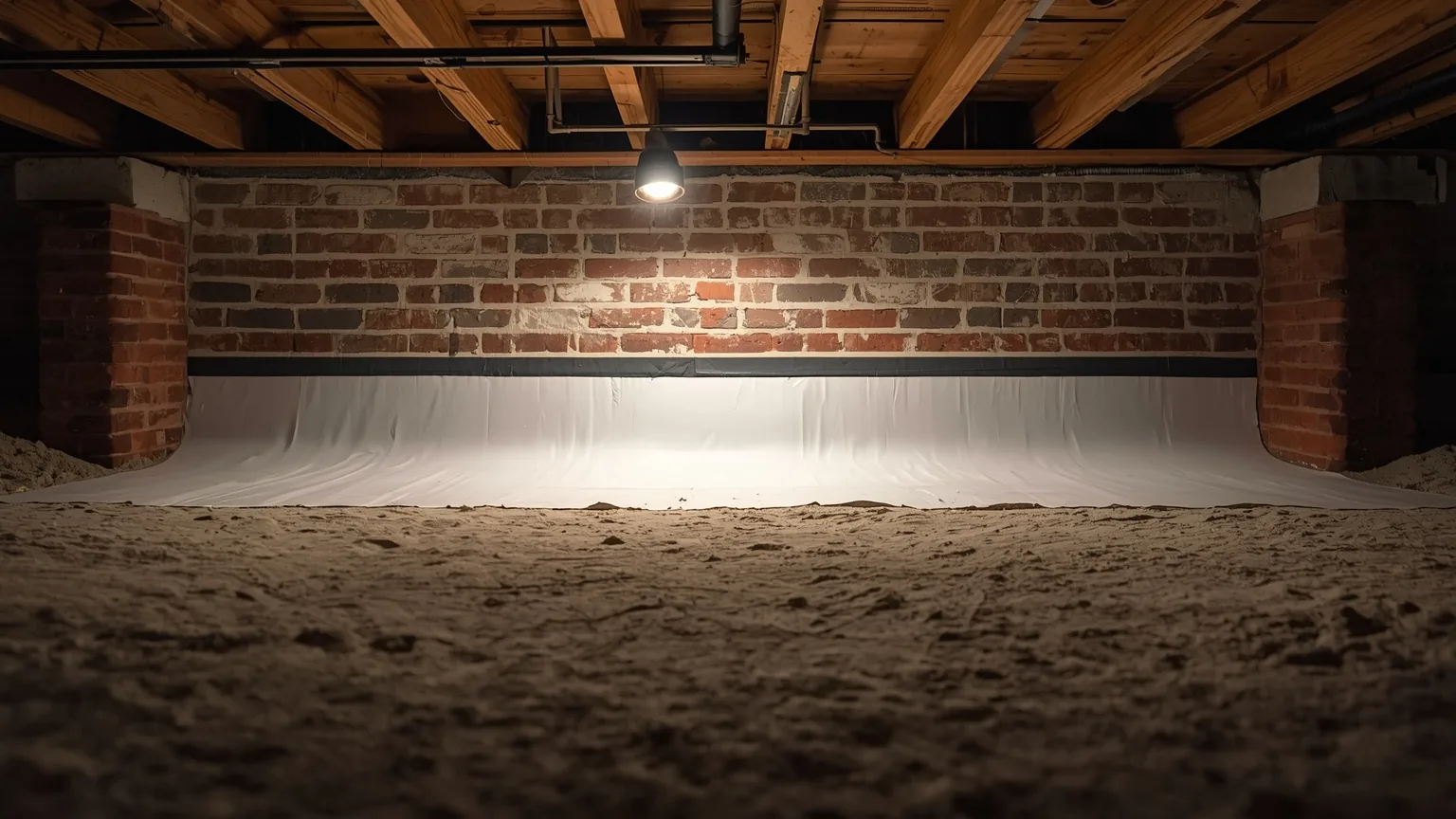
The full sealed system — liner, closed vents and managed humidity.
Crawl Space Encapsulation Cost
The variables behind the spread — and why one number cannot be honest.
Vapor Barrier Installation
Ground cover that stops soil moisture — and the standard SC actually names.
Find out what is actually causing it.
An inspection underneath, readings taken on site, and a written scope ahead of any figure.